Field of Science

Pages

Showing posts with label posts that will bring me creepy internet traffic. Show all posts

Newly Discovered Ant Convinces Others to Be Its Slaves


Studies of ants have the ring of medieval epics: there are queens, castes, warring soldiers and scouts. Certain ant species go on violent raids of neighboring colonies, picking up the young in their jaws and carrying them back to their own homes. The stolen ants become workers that live to serve these "slave-makers." A newly discovered slave-making ant species, though, sometimes accomplishes the same kind of coup without the need for violence. 

Slave-making ants live all over, but scientists have so far found the new species in just three spots. In the early 2000s, the ants turned up in a state park in Vermont and a nature preserve in Rensselaerville, New York. In recent years, they've been found at Sleeping Bear Dunes National Lakeshore in Michigan.


If you stand on the Sleeping Bear dunes, you might never guess that this postcard-perfect vista hides a small-scale war. But in the forest, tucked inside holes in acorns, sticks, and hickory nuts, Temnothorax pilagensthe "pillage ant"—is at work.

Bernhard Seifert of the Senckenberg Museum for Natural History in Goerlitz, Germany, and his colleagues say pillage ants have two preferred host species: Temnothorax longispinosus and Temnothorax ambiguous. Yes, all three share a name because they're relatives. "Ninety percent of slave-maker ants are related to their slave-species," Seifert says. The pillage ant is "much closer than usual" to T. longispinosus, though; comparing the ants' DNA revealed that the two are sister species.

The slave-makers don't treat these sisters well. Scouts from a slave-maker colony go out looking for nests to raid, either alone or with up to four worker ants following. When they find a target and charge inside, they may meet resistance. In this case the slave-makers make "frequent and effective use of the stinger," the authors write: a sting by a pillage ant quickly paralyzes and kills a host ant. In the raids that the scientists observed, casualties in the invaded ant colony could reach as high as 100 percent.

Yet the takeovers could also be peaceful. In some cases, especially in nests without a queen, the invaded ants barely objected to their pillaging guests. Slave-makers carried off not just larvae and pupae from the colony, but adult ants too. "Occasionally, host workers [tried] to drag slavemakers out of the nest," the authors write, but at other times they didn't resist. The whole raid could go off with hardly any violence.

The scientists think pillage ants somehow disguise themselves, so that ants in the invaded nests surrender without objecting. Seifert says "different forms of camouflage" could be responsible. The slave-makers might mimic the coloring, shape, or movement of their hosts well enough that the hosts don't notice when the raid begins. Or the mimicry might be chemical—pheromones given off by the slave-makers might convince their victims everything's fine. Back at the pillage ants' home nest, a typical colony includes about four workers and a dozen slaves.

Compared to other slave-makers, the pillage ant is unusual for its tiny raiding parties. Seifert says this species is also unique in that a "good number [of] raids can be undertaken without experiencing resistance." Surrounded by the beauty of the dunes, the slave-makers' victims are lulled into submission. By the time their young grow into hostage adults in their enemies' nests, it's too late to fight.


Images: (top) Miriam Papenhagen; (bottom) me.

Bernhard Seifert, Isabelle Kleeberg, Barbara Feldmeyer, Tobias Pamminger, Evelien Jongepier, & Susanne Foitzik (2014). Temnothorax pilagens sp. n. – a new slave-making species of the tribe Formicoxenini from North America (Hymenoptera, Formicidae)
ZooKeys : 10.3897/zookeys.368.6423


Note: It's not always too late to fight. In what scientists call a "slave rebellion," some enslaved ants have been seen tearing their captors' young to pieces or abandoning them outside the nest.

Why It's Nearly Impossible to Castrate a Hippo


Chances are you've never wondered how difficult it is to remove the testes of a hippopotamus. Other people have been thinking hard about it, though, because in fact it's almost impossible.

Before sitting down to emasculate a common hippopotamus, Hippopotamus amphibius, it would be reasonable to ask why. They're a threatened species, so usually conservationists try to make more baby hippos—not fewer. But in zoos, hippos turn out to be prolific baby-makers. Females can live for 40 years and may birth 25 calves in that time. This would be great news in the wild, but zookeepers don't always have someplace to store a new two-ton animal.

Male hippos can also be aggressive toward each other, at least while they have all their man parts. For both of these reasons, zoos may want to have their male hippos fixed. But there are a few factors working against them, explains a new paper in the journal Theriogenology (that's reproductive science for vets) by an international group of authors.

The first challenge is that hippopotamuses hide their genitals. The testes are inside the body, instead of outside in a scrotum. (Other mammals in the internal-testes club, since you asked, include the armadillo, sloth, whale, and platypus.) This makes the hippo's testes totally invisible from the outside. Combined with a penis that the paper's authors describe as "discreet," it means it's hard to tell males from females at a distance.

Another problem is that testes aren't in the same place from one hippo to the next, and they may "retract" even farther during surgery. Hippopotamuses are also difficult to safely put to sleep. "In the past, hippopotamus anesthesia has been fraught with serious complications," the authors explain.

After moving past the anesthesia problem (they used an apparently safer blend of drugs, delivered via a dart to the hippo's ear), the researchers turned to the anatomical problems. Their answer was ultrasound. Once they had positioned the animal, they used ultrasound imaging to find the testes—then used it again after cutting into the hippo, if the testis they were looking for had scooted farther away from them.


Even after finding the sneaky organs, the procedure wasn't simple. The depth of the testes' hiding places varied by as much as 16 inches from one hippo to the next. Everything had to be done deep inside the animal's body, making it hard to see what was going on. "Grasping the testicle with forceps proved laborious" in most of the animals, the authors write. They also mention using a "two-handed technique" and "moderate traction." The whole hour-and-a-half procedure, based on a method for castrating horses, is described in detail for anyone who wants to try it themselves.

All ten hippos in the study were successfully castrated, though one died shortly afterward, following a complication from a unknown pre-existing condition. Over the next six months, the authors checked in with the zoos housing the hippos to see whether their behavior or interaction with other animals had changed. There were four cases where zoos wanted their hippos fixed to ease aggression between males; in all four, the problem seemed better. (One zoo, though, reported that castrated males were harassed more by females.) Overall, the authors think their technique will help zoos take better care of their hippos.

The final challenge to hippopotamus surgery—what should be a challenge, anyway—is that the animals spend most of their time in a pool of water packed with feces. The animals in the study lowered their stitched-up bellies into this infectious slurry as soon as they had a chance. Yet all of them healed from surgery without trouble. Hippos in general seem to be especially good healers, the authors write.

A possible explanation for the animals' healing superpower is the "red sweat" or "blood sweat" that oozes from their skin. It's not really sweat and it doesn't contain blood, though it is red. The pigments in this skin secretion have been found to absorb UV light, making the "sweat" a potential sunscreen. The pigments can also keep bacteria from growing. So a built-in antibiotic may be what keeps hippos from getting infections after they tussle and bite each other (or after meddling vets come and cut out their manhood). However the red sweat works, it shows that a hippo's secrets don't end with the location of his testicles.


Images: Charlesjsharp (via Wikimedia Commons); drawings by Eva Polsterer (from Walzer et al.).

Walzer C, Petit T, Stalder GL, Horowitz I, Saragusty J, & Hermes R (2013). Surgical castration of the male common hippopotamus (Hippopotamus amphibius). Theriogenology PMID: 24246424

Fish Evolve Stabbier Genitals When Predators Are Near


Like sock garters and homburg hats, the equipment used by our great-grandparents doesn't always cut it for later generations. Certain male fish have evolved differently shaped genitals depending on what other fish share their caves. Attracting females, though, doesn't seem to be as important as not getting eaten.

Most fish reproduce simply by scattering a lot of of eggs and sperm around their environment. But a few types of fish are "livebearers": their eggs are fertilized and hatched inside the female's body, then come swimming out as fully formed miniature fish. Many sharks bear live young. So does Gambusia hubbsi, the Bahamas mosquitofish.

The main difficulty of reproducing this way—at least, the main difficulty from a male perspective—is getting the sperm inside the female's body. You can't just leave it around the ocean and hope for the best. Males in the mosquitofish's family solve this problem with an organ called a gonopodium. The body part's overall size is subject to a couple of different evolutionary pressures: Females of some species prefer a larger gonopodium. But carrying around the bigger organ slows males down when they're trying to escape predators.

Justa Heinen-Kay and R. Brian Langerhans at North Carolina State University were curious about just one part of the gonopodium. The tip is tiny but weapon-like: about one millimeter long, it carries bony hooks, spines, and teeth. It's not big enough slow males down while swimming, or visible enough for females to judge it. Yet the authors wondered whether other evolutionary pressures might be acting on this spiky little body part.

The researchers collected mosquitofish from water-filled, vertical caves in the Bahamas called blue holes. Certain populations of mosquitofish live in caves that also contain their predator Gobiomorus dormitor, the bigmouth sleeper. Other populations live with few predators, and can swim and mate—a process that may or may not involve female cooperation—without the threat of being eaten.

Comparing mosquitofish from 10 caves with predatory bigmouth sleepers and 12 caves without them, Heinen-Kay and Langerhans saw that the fish had evolved different genital shapes. Male mosquitofish that lived with a lot of predators had longer tips on their gonopodia, and those tips were more densely covered in bony bits.

This sturdier, stabbier tip may help a male to work more quickly and efficiently, whether or not the female wants him to. The authors speculate that when predators are nearby and time is short, this genital shape is an advantage. Bony hooks "may serve as holdfast devices," and a longer shape might get sperm farther inside the female while pushing out anything competitors have left behind. But in caves without predators, they add delicately, "males may rely more on cooperation and less on genital shape."

However it helps, modifying the shape of their genitals must be a powerful tool for mosquitofish. Over and over again, fish populations living with predators have evolved in the same way. It's a trend that's here to stay—despite what their ancestors might think.


J. L. HEINEN-KAY, & R. B. LANGERHANS (2013). Predation-associated divergence of male genital morphology in a livebearing fish. Journal of Evolutionary Biology DOI: 10.1111/jeb.12229

Image: Heinen-Kay and Langerhans.

Male Frogs Grip Mates with Pheromone-Injecting Thumb Spikes


There's nothing subtle about the wooing of European common frogs. Males grow spiny pads on their thumbs during the breeding season, the better to grip their mates. As if that weren't enough, the pads also seem to channel pheromones out of a frog's hands and straight into his female partner's body.

Frogs fertilize their eggs out in the open, so you might think there'd be no need for all this effort. Yet males of most frog species can be seen during the mating season "taking a piggyback ride" on their mates, as a group of scientists in Belgium euphemistically puts it. Technically called amplexus, the male-on-top position allows him to fertilize the eggs just as the female sends them out of her body.

In some frog and salamander species, males further ensure their success by temporarily growing tough, often spiky pads on their forearms or thumbs. Earlier research discovered glands of some sort sitting beneath these pads, but it wasn't clear what the glands did. So the scientists in Belgium decided to take a closer look at the hands of one such animal: Rana temporaria, the European common frog.

The scientists used micro-CT scanning to build a 3D image of a male frog's thumb pad. They saw that glands underneath the pad led to ducts, which traveled up through the pad to pores on its surface. It appeared that the grippy gloves donned by males for the mating season were also some sort of delivery system.

But what were they delivering? An analysis of proteins in the glands turned up a group of molecules the authors dubbed "amplexins." They're in the same family as certain proteins found in male mammals' reproductive organs, as well as a courtship pheromone in salamanders. In humans, proteins from this family help regulate how eggs and sperm interact.

Comparing thumb pads in the breeding season to shrunken-back thumb pads during the rest of the year, the scientists saw that amplexin production suddenly dropped off near the end of the breeding season. During the rest of the year, the frogs didn't make amplexins at all.

A male who's already got his hooks—literally—into his partner probably doesn't need to worry about courtship. But the authors speculate that amplexins in these frogs might be pheromones that speed up the mating process. Female frogs' chests are often scraped and scratched by their mates' spiny thumb pads, and this may be how a male delivers the pheromones to his partner: straight into her circulatory system.

Hey, it works for Cupid and his arrows. Female frogs, though, would probably give this system two thumbs down.


Image: by Erik Paterson (via Flickr)

Bert Willaert, Franky Bossuyt, Sunita Janssenswillen, Dominique Adriaens, Geert Baggerman, Severine Matthijs, Elin Pauwels, Paul Proost, Arent Raepsaet, Liliane Schoofs, Gwij Stegen, Dag Treer, Luc Van Hoorebeke, Wim Vandebergh, & Ines Van Bocxlaer (2013). Frog nuptial pads secrete mating season-specific proteins related to salamander pheromones Journal of Experimental Biology DOI: 10.1242/jeb.086363

12 Things I Found Exploring the California Seafloor (and You Can Too)

If for some reason you haven't been invited on a submersible ride-along, the next best thing is probably 340 miles' worth of raw video footage from the ocean floor.

The U.S. Geological Survey just released a whole mess of data from its California Seafloor Mapping Program. Together with many partners, it's working on building maps of the California coast that include seafloor depth, habitat type, and other geological features. There's also video footage from cameras towed a few feet above the seafloor, as well as 87,000 still photos taken at regular intervals.

At the project's website, visitors can explore an interactive map that's layered with whichever types of data interest them. I know somebody out there is into bathymetry, but I opted to explore the library of photos and videos. Below is a selection of things I spotted. 

The videos are kind of tedious but will reward the patient viewer with an occasional sea cucumber or alarmed fish. And the up-and-down bouncing of the camera as it travels over the seafloor might induce seasickness, so I'm guessing it's a realistic experience. If I ever get that invitation, I'll let you know.

Local color.


Cauliflower trees (disclaimer: I am not a marine biologist)...


...which the camera smashed into.


Scientists!


Crabs making friends with starfish.


An ex-starfish? Note the impression in the ground. Maybe it got friendly with the wrong arthropod.


Further evidence for my theory that at the bottom of the sea, everything is either terrifying...


...or shaped like a penis. (What? I edit a kids' science magazine. YOU try finding a photograph of a bone-eating worm that's appropriate for 12-year-olds. Go Google it right now. I'll wait.)


We crashed into the ground again. Maybe the little crabs that keep scurrying away from the camera have the right idea.


Fodder for the future BuzzFeed article "45 Ocean-Floor Animals That Are Totally Waving Hello."


And something incognito. Does anyone know what it is?


Golden, Nadine E., & Cochrane, Guy R. (2013). California Seafloor Mapping Program video and photograph portal U.S. Geological Survey data set : 10.5066F7J1015K

Images: Golden, Nadine E., and Cochrane, Guy R., 2013, California Seafloor Mapping Program video and photograph portal. U.S. Geological Survey data set, doi.10.5066F7J1015K

Man Develops Synesthesia after Stroke, Finds James Bond Theme "Orgasmic"


It wasn't only James Bond. Nine months after suffering a stroke, a 45-year-old happened to notice that the wailing horns in a Bond movie's opening credits gave him strange, ecstatic feelings. But any high-pitched brass instrumentals would do the trick. A musical segment during the Beijing Olympics gave him the same feelings. The man's doctors came to realize that when his brain rebuilt itself after the stroke, he had developed synesthesia.

Associating letters or numbers with specific colors is the most common kind of synesthesia. Other sensory combinations, like experiencing tastes when hearing certain sounds, are rarer. In some cases, colors, sounds, or other sensations may trigger emotions.

The recovered stroke victim, whom doctors and researchers at St. Michael's hospital in Toronto described in the journal Neurology, turned out to have more than one trigger for his emotional synesthesia. High-pitched horns gave him very good feelings, but words written in the color blue made him feel "disgusted." Yellow words were also disgusting, though a little less so.

To confirm what the patient said he was experiencing, the authors did fMRI scans of his brain, along with six non-synesthetic subjects of the same age. All the subjects listened to the Bond theme in the scanner, and their brain activity was compared to what happened when they heard a solo euphonium—a tuba-like instrument that didn't excite the patient at all.

Control subjects responded to the Bond theme no differently than the euphonium, but the stroke victim's brain had a much stronger response to the theme song. The activity in his brain, spread out across many different areas, fit with "intense emotional arousal," the authors write, "rather than simply...a pleasant musical experience." Apparently, the music really was sending him to double-oh-heaven.

In the scanner, subjects also viewed blocks of text written in yellow, blue, or black. While control subjects' brains didn't respond differently to the different colors, the synesthetic man's brain did. His neural activity when reading blue or yellow words suggested he was processing an emotional stimulus, the authors say.

There's only been one other case recorded of someone developing synesthesia in mid-life. That person's experience—a tingling sensation when hearing certain sounds—also came after a stroke. Both patients had damage in the same region of their brains: the thalamus. Tom Schweizer, director of neuroscience research at St. Michael's hospital and the lead author of the paper, says this is significant.

Schweizer describes the walnut-sized thalamus as a "central relay station" for the brain. It's densely packed with fibers that connect neurons in different brain regions. Schweizer thinks that in trying to repair itself after the stroke, the thalamus may have gotten some wires crossed.

The patient's synesthesia isn't exactly like traditional synesthesia, which develops in childhood. For example, he's able to suppress his feelings if he tries, while synesthesia is usually defined as involuntary. Nevertheless, Schweizer says this case "could be a rare window" into how synesthesia develops and the role the thalamus might play.

Even the authors of the study couldn't resist a Bond pun, titling their paper "From the Thalamus with Love." (Why not "License to Thrill"? Or "Dr. No...More Jokes Please; Don't You Know This Makes It Really Awkward When People Invite Me to Jazz Concerts?") Yet his case gives a serious clue as to how the brain's wires can get double-crossed.


Image: Paul-W (via Flickr)

Tom A. Schweizer, PhD, Zeyu Li, BSc, Corinne E. Fischer, MD, Michael P. Alexander, MD, Stephen D. Smith, PhD, Simon J. Graham, PhD, & Luis Fornazarri, MD (2013). From the thalamus with love: A rare window into the locus of emotional synesthesia Neurology DOI: 10.1212/WNL.0b013e31829d86cc

Now Available: A Chastity Belt for Your Mouth


Is your main problem with dieting that you have a whorish mouth? Instead of saving itself for the truly worthy suitors—the poached lean proteins and steamed vegetables with dressing on the side—does it open up for every corn chip and chicken wing that passes by?

Good news, tramp-trap! For only $2,000 plus airfare to Los Angeles, you can have a patch of spiky plastic mesh stitched onto your tongue.

Doctor Paul Chugay promises the procedure is quick and easy. You’ll be back at work the next day. And instead of snacking at your desk, you’ll be sipping a new all-liquid diet, because your lingual chastity garment makes it too painful to consume solid foods.

Patients can expect to lose 20 to 30 pounds in a month on his 800-calorie-a-day “liquid beverage plan,” Chugay says in a video* on his site, or as much as 50 pounds in two months. After that, according to a Time article, the patch will have to be removed; otherwise it may be absorbed into the flesh permanently. That tongue just can’t control itself.

Image: www.drchugay.com

*Website NSFW, thanks to perky plastic-surgery “after” photos everywhere.

Scientists Unsure Why Female Flies Expel Sperm and Eat It


She's apparently a picky mater but not a picky eater. The female of a certain fly species, after mating with a male, dumps his ejaculate back out of her body and onto the ground. Then she gobbles it up. Despite new hints that this behavior may help the female choose which partner fertilizes her eggs, or keep her healthy in times of famine, scientists are still a little perplexed by it.

Various female insects, spiders, and birds are known to expel the male ejaculate from their bodies after the deed is done. In some cases, it seems to let them decide which male's sperm reaches their eggs. Females don't always choose who mates with them, but that doesn't mean they have no choice in their progeny's fatherhood. (This kind of female choosiness about sperm can lead to evolutionary arms races between males and females. The "copulatory plug" is a popular tool among male insects, spiders, reptiles, and even some mammals.)

Eating the ejaculate, as Euxesta bilimeki does, is less popular. This fly lives on agave plants and mates pretty much all the time. "Females can be observed escaping male advances in chases that can last more than an hour," write Christian Luis Rodriguez-Enriquez and his coauthors from the Instituto de Ecología in Veracruz, Mexico. Using videocameras and careful meal planning, they tried to divine a reason for the female flies' behavior.

Out of 74 females that the researchers recorded mating, every one expelled and ate the ejaculate afterward. The researchers then killed the females and pulled them apart with tweezers to look for sperm inside their various storage locations. They found that three-quarters of the females had kept some sperm from their male partner, while one-quarter had expelled it all.

There was no obvious rule to which sperm the females kept. There were some patterns, though. For example, females that mated with larger males, then waited longer before expelling the sperm, were more likely to keep some. Since the female's behavior doesn't seem random—and since it's possible for her to keep no sperm at all—the authors think she may be choosing between mates after the fact.

This could explain why the female expels the sperm, but not why she eats it. In another experiment, researchers fed female flies various diets and measured whether supplementing those diets with ejaculate made them healthier. When female flies were starved entirely, the extra snack did help them live longer—but under normal circumstances there was no difference. The authors report their results in Behavioral Ecology and Sociobiology.

"Our study appears to have raised more questions than provided answers," the authors admit. They expected there would be some clear nutritional benefit to justify the females' tastes.

Rodriguez-Enriquez and his coauthors speculate that the ejaculate-as-meal habit may have evolved as a "nuptial gift." This is an edible present that male insects sometimes give to females as part of their courtship. Usually it's nutritious—a nicely wrapped dead bug, say—but in some cases it's just an empty sac. The ejaculate may be, like these gifts, just an edible empty gesture.


(The above is a video of Euxesta bilimeki flies mating. It doesn't look any different from what you're imagining, but the soundtrack is a nice twist.)


Rodriguez-Enriquez, C., Tadeo, E., & Rull, J. (2013). Elucidating the function of ejaculate expulsion and consumption after copulation by female Euxesta bilimeki Behavioral Ecology and Sociobiology DOI: 10.1007/s00265-013-1518-5

Image and video: Rodriguez-Enriquez et al.

The Evolution of Humans and Lice in 13 Reality TV Titles


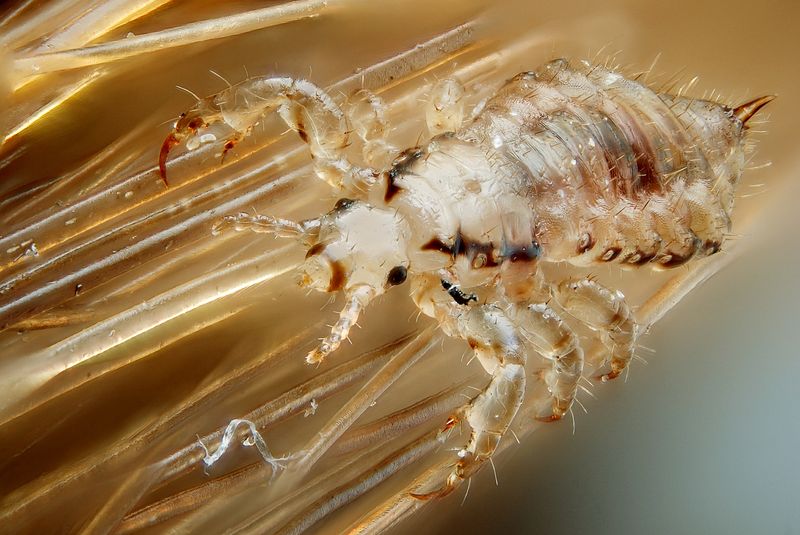
Humans and our lice are even closer travel companions than Kourtney and Kim when they took New York. The parasites cling to us more tightly than Paris Hilton's new BFF. They've been such cozy acquaintances of ours, in fact, that the story of human evolution is written into their genes.

That's what Marina Ascunce and other researchers at the University of Florida found when they sampled lice from around the world and compared their DNA. In the chromosomes of these wingless bloodsuckers, they discovered a window on human culture almost as good as a flip through the TV guide.

Fear Factor
"Lice" is a four-letter word that can inspire dread in the hearts of kindergarten teachers, moms and dads, and well-coiffed middle schoolers. An infestation of head lice is usually harmless, if horrifying. Ascunce and her coworkers point out, though, that head lice in the United States, Nepal and Ethiopia have been found carrying disease-causing bacteria.

What Not to Wear
More dangerous than head lice are body or clothing lice, which mostly affect the homeless and people living in refugee camps. These lice can carry at least three kinds of bacteria that are dangerous to humans. Over the past few decades, the authors write, there have been several disease outbreaks tied to body lice—including an outbreak of epidemic typhus (caused by the bacterium Rickettsia prowazekii) in Burundi that sickened more than 45,000 people.

Body and head lice belong to the same species (Pediculus humanus). Yet the two subspecies, like knockoff shows on different TV channels, make up separate populations that don't encounter each other in nature.

The Pickup Artist
The researchers used lice that had been plucked off of humans in 11 locations around the world. Head lice came from a few sites each in the United States, Asia, and Europe, plus Honduras. There were also body lice from Nepal and from a homeless shelter in Canada, for a total of 93 lice.

The Bachelor
Incidentally, head lice infestations usually include more females than males. It's not clear why, but when you have lice, your scalp is like one big rose ceremony.

House Hunters International
By letting them stow away in our hair while our own species migrated around the world, we've created unique geographic populations of lice. The head lice in this study fell into into three distinct groups based on their shared DNA. Asian lice (from Thailand, Nepal and Cambodia) made up one group. Lice from Honduras were another distinct group. Lice in the United States, though, were in the same genetic cluster as those from Europe.

Temptation Island
Louse DNA shows plenty of evidence of inbreeding. This isn't too surprising when you consider that populations reproduce as fast as they can while staying marooned on one person's head (and that new infestations can result from just one egg-bearing female crawling onto a fresh scalp). The most-inbred lice were found in New York.

19 Kids and Counting 
Compared to their highly inbred head cousins, body lice showed a little more diversity. One reason for this, the authors point out, may be that body lice have more young. A female head louse can leave 150 eggs nestled and glued into her host's hair; a female body louse may leave twice that many eggs in the seams and hems of a person's clothing.

MXC: Most Extreme Elimination Challenge
Another factor that has probably contributed to low diversity in lice populations is our ongoing effort to kill them. Head lice infestations have increased around the world, the authors write, in part because the bugs have developed resistance to the insecticides we dump on kids' heads. A dousing with poison may leave behind a few hardy lice, which can then repopulate the whole area. (Biologists call this kind of population narrowing and regrowth a "bottleneck.")

Britain's Worst Celebrity Driver
Actually it has nothing to do with lice, but did you guys know this was a real show?

The Real World: Boston
The American lice sampled by Ascunce and her colleagues (from New York, San Francisco, and Florida) were a genetic match to the European lice (which came from Norway and the United Kingdom). If this pattern holds up across the United States and Europe, it would suggest that the lice Americans carry traveled to the New World along with European colonists. In other words, we have Columbus's lice.

Sarah Palin's Alaska
The genetically distinct lice found in Honduras, though, don't seem to have come over with the pilgrims. The authors think it's possible that the Honduran bugs represent the native American lice. Perhaps they came here on the heads of more ancient humans who crossed into this continent from Asia, traveling across the Bering Strait and down through Alaska long before Europeans arrived.

Wife Swap
An earlier study of louse mitochondrial DNA (genetic material that's only passed through mothers) turned up a distinct genetic group that's present in Europe, Australia, and the New World, but not in Africa. It's possible that this DNA, rather than having come from the lice our most ancient ancestors carried out of Africa, represents lice those humans picked up while hobnobbing with Neanderthals on their way through Eurasia. 

Survivor: Heroes vs. Villains
The story of our conflict with lice is a classic one. As long as the insects keep developing resistance to our poisons and fighting back when we try to kill them, this series isn't likely to ever get canceled.


Ascunce, M., Toups, M., Kassu, G., Fane, J., Scholl, K., & Reed, D. (2013). Nuclear Genetic Diversity in Human Lice (Pediculus humanus) Reveals Continental Differences and High Inbreeding among Worldwide Populations PLoS ONE, 8 (2) DOI: 10.1371/journal.pone.0057619

Image: Gilles San Martin (via Wikimedia Commons)

This post has been submitted to the 2013 blog contest held by the National Evolutionary Synthesis Center (NESCent).

Help Desk: Relationship Edition


A couple months ago I introduced the Help Desk so I could answer real questions from Inkfish readers. These aren't questions people submitted intentionally, though—they're search terms that sent people to this site. (Take note, Googlers and Bingers of the world: anyone using web analytics can see your searches.)

This time, in honor of Valentine's Day, the Help Desk is focusing on relationships. I hope the unsatisfied searchers out there can now find the flower-pooping good twins they're looking for.


does music cause rodents to have more babies
It's been suggested that background music helps lab mice to relax and breed more, according to a 2005 paper in the Institute for Laboratory Animal Research Journal. However, they'll still startle easily at a loud noise, regardless of background sounds. In behavioral studies, new age music in particular seemed to calm mice down (compared to classical music, pop, or silence). So if you're looking to set the mood, try Enya rather than Bieber.

You can also teach mice to like music if you introduce it during a certain window in their development, according to a Harvard study. But this research looked only at Beethoven and bossa nova, and didn't give mice the option of getting romantic while the music was playing.

evil twin symptoms
Evil twin is not a medically recognized condition. Perhaps you should try consulting a psychotherapist or a screenwriter.

most inconvenient moments to have narcolepsy
Wheelbarrow race, optometrist appointment, listening to a deathbed confession, pairs ice dancing. And the obvious one.

(The most convenient moments to have narcolepsy include mattress testing, portrait sitting, and televised basketball games.)

how to make a sperm cell
Thankfully, it's not up to you.

that boy has a huge belly button
If a giant navel is the worst complaint you have about a person, things probably aren't so bad. Plus, that belly button is a hotbed of bacterial diversity—and so is yours! Look, the two of you have one more topic for dinner conversation already.

a pig look better than u
Pigs can be pretty charming (see below). If you're looking for a creative insult, what about "a giant land crab look better than u"? Or "a Chinese soft-shelled turtle has a smaller tube coming out of the middle of its face than u"? Zing! You're welcome.


pig repeller
If you didn't want the pig around, maybe you shouldn't have flattered it just now.

bloomers for older woman
It sounds like you're searching for a gift for your significant other. What kind of "older" are we talking about—like nineteenth century? If so, bloomers sound great.

how to stay tight with a big guy
Just because a guy has gained some weight doesn't mean you can't be friends with him anymore. (That is what you meant, right?)

girl that poops flowers
If you're wondering why OKCupid rejected your match criterion, I'm sorry to have to tell you that nobody poops flowers. However! If you or your normally excreting girlfriend are willing to commit to a juice cleanse, you can spend a few days pooping vegetables.

how to ruin a party you weren't invited to
That's tough, but I'm going to have to go back to giant land crabs.

mouse quiet too quiet
Maybe that Enya CD did the trick.

don't make sex in the forest
Noted.


Earlier: Help Desk, Part 1.

Images: Help desk by Aryc Ogre; piglet by Ed Mitchell; robber crab by John TannChinese soft-shelled turtle by muzina_shanghai (all via Flickr)

Jays Know Which Worms Their Sweethearts Crave (Do You?)


Finding just the right gift for a significant other sometimes means relying on hints; this is especially true if you are a bird and your significant other is also a bird. Even the cleverest corvids aren't great with wish lists. Male Eurasian jays, though, seem to be able to deduce which treats their mates want most.

Sharing food is an important courtship ritual for the Eurasian jay (Garrulus glandarius). Passing snacks to each other helps the birds form, and nourish, long-term relationships. A female might accept any tidbit her partner gives her, whether she wants it or not, for the sake of boosting the bond—or just because she plans on stashing it for later. If a male can correctly guess what foods his mate prefers, though, he could increase his value in her beady eyes.

Figuring out what's in another animal's mind is no mean feat. Yet Eurasian jays are a member of the famously bright corvid family; relatives have been known to reenact Aesop's fables, outsmart small children, and sled down snow-covered roofs. Nicola Clayton and other researchers at the University of Cambridge looked for evidence that these birds are also capable of seeing from another's perspective.

The experiment relied on "specific satiety," which is when an animal gets tired of one kind of food but still has an appetite for a different food. This phenomenon is familiar to anyone who pushes away a plate of pasta, feeling stuffed, and then considers a dessert menu.

For the seven pairs of Eurasian jays in the study, the foods in question weren't pasta and tiramisu but worms and more worms. Specifically, wax moth larvae and mealworm larvae. When they were first fed on one kind of larva and then offered a choice between two bowls, both male and female birds preferred to eat the kind of larva they hadn't already had.

To see whether male jays understood that females felt this way too, the researchers fed female jays either wax moth or mealworm larvae while their male partners watched from the other side of a screen. Then they offered the male both kinds of larva, and let him choose which ones to pick up and pass to his mate through the screen.

After watching their mates eat one kind of larva, male jays were more likely to feed them the other kind, Clayton reports in PNAS. It wasn't because the males themselves were hungry for that kind of food; the researchers checked this in a separate experiment by offering the males their own bowls of larvae after watching females feed. Having already eaten meals of "soaked dog biscuits, cheese, seeds, nuts and fruit," the males had their own preferences about wax moths versus mealworms (two flavors you won't find in a Whitman's sampler). But when feeding their mate, they followed her preference instead.

Nor were the females telling their mates what they wanted, in some secret bird language, right there at the screen. The researchers know this because when males couldn't see the first feeding, they failed to give their mates their preferred larvae. The males had to see females being fed to guess what they'd want later.

The study used a small number of birds in unnatural circumstances. If Eurasian jays can truly put themselves in each other's shoes, though, they are members of the cognitive elite. Deducing another's intentions or desires is something we humans rarely admit other animals are capable of. But then, it can be hard to take a hint.


Ostojic, L., Shaw, R., Cheke, L., & Clayton, N. (2013). Evidence suggesting that desire-state attribution may govern food sharing in Eurasian jays Proceedings of the National Academy of Sciences DOI: 10.1073/pnas.1209926110

Image: Eurasian Jay mating pair engaged in food-sharing, by Ljerka Ostojic.

In Our Partners' Heights, We Get What We Want


If you ask most heterosexual people what height they're looking for in a partner, they'll describe basically what a children's-book illustrator would draw: the man taller than the woman but not towering over her. But those of us who aren't pen-and-paper must settle for real human partners in human shapes and sizes. Nevertheless, new research says most people end up with a reality that matches the fantasy.

Researchers led by Gert Stulp of the University of Groningen in the Netherlands wondered whether people's professed height preferences matched who they ended up with. Earlier studies had shown that within Western cultures, there are clear trends: Taller people are interested in other tall people; shorter people like short people. And both sexes prefer that the male be taller.

But not too tall! One study combed through thousands of personal ads from a dating site that let users indicate the tallest and shortest person they'd consider dating. On average, women said they weren't interested in men more than 17% taller than themselves. For a 5-foot-5 woman, for example, that means  a man over 6 foot 4 seems like a little much.

To compare these preferences to a real population, Stulp and his coauthors used data from the Millennium Cohort Study, a broad sampling of almost 19,000 babies born in the United Kingdom in the year 2000. Among other things, the parents of these babies had been asked for their heights, and 12,502 couples had answered the question.

To see what it would look like if people paired off with no regard to height, the researchers created 10,000 random reshufflings of their UK couples. They then compared these chance pairings to reality.

First, they tested whether people seek out their own kind. Sure enough, taller people had taller partners, and shorter people had shorter partners.

The next question was whether people really care about the man being taller. Of course, since men are on average taller than women, randomly pairing people off is likely to get you a taller male anyway. In the randomized UK couples, the male was taller 89.8% of the time. But in reality, 92.5% of couples had a taller male, a significant difference. And when the woman was taller, it was likely to be only by a tiny bit.

Finally, people say they prefer height differences that aren't too exaggerated. But do they follow through? The authors looked for height gaps of 25 centimeters or more. In the random pairings, this occurred in 15.7% of couples. But in real life, only 13.9% of couples had a height difference this huge.

More often than chance would predict, these couples had followed traditional height preferences. That suggests that when we choose our partners, height does matter.

The study doesn't address the preferences (or reality) of couples who are not heterosexual, not parents, or not in the United Kingdom. Stulp says research has shown that across Western cultures, heterosexual people report very similar preferences for a partner's height. (The Netherlands, where the 6-foot-7 Stulp lives, is home to the tallest people in the world. But he says he believes height preferences in this land of giants are the same, just shifted upward.) In non-Western cultures, he says, those preferences are slightly different and more variable.

Stulp, in fact, was surprised that height preferences didn't have an even stronger affect on the results. He expected reality to be further from random chance than it was. But, writing in PLOS ONE, he acknowledges that many factors affect our choice of partner. "Height," he writes, "is but one of many characteristics valued in a mate."


Stulp, G., Buunk, A., Pollet, T., Nettle, D., & Verhulst, S. (2013). Are Human Mating Preferences with Respect to Height Reflected in Actual Pairings? PLoS ONE, 8 (1) DOI: 10.1371/journal.pone.0054186

Image: Peter Rukavina (Flickr)

12 Days of Inkfish, Day 12: Cuddlefish


Sometimes a cuttlefish wants to cuddle, and sometimes it wants to attack you with its face and ingest you whole. Both sides of the cephalopod's personality are on display in this video from the BBC. Also on display: the giant cuttlefish's unbelievable full-body strobe light effect. This is an animal you want to stay on the good side of.

Thanks for celebrating the 12 Days of Inkfish with me! Next week, regularly scheduled programming will return. Stay tuned for new science and new marveling at nature's old—but spectacular—tricks.

Until then, did you miss any of these?

Day 1: What happens when inkfish receive gifts
Day 2: Life as an upside-down jelly
Day 3: Head explosions and a reverse sun
Day 4: The help desk answers "orangutan stop following me" and other reader questions
Day 5: A video of grebes running on water to prove their commitment
Day 6: How Zion Canyon is like the Princess and the Pea
Day 7: Which posts won Best Mustache and other superlatives in the 2012 yearbook
Day 8: This nebula is a square peg in a round universe, thank goodness
Day 9: These airport worms are hard at work eating your garbage
Day 10: Sending you all on an acoustic scavenger hunt (please report back!)
Day 11: The most charming breeds of purse animals


Image: Screenshot from "Animal mating rituals of giant cuttle fish in the blue Australian ocean waters" by BBC Worldwide

Why You Itch When Others Scratch


Itching is contagious, and not only when one party has the chicken pox. The mere sight of a stranger scratching can be enough to trigger an itch in your own flesh. If you're especially prone to contagious itchiness, psychologists say, it's not because you relate well to other people—you're just neurotic.

The researchers who delved into the science of contagious itching thought it might be similar to another famously spreadable phenomenon: yawning. Previous studies found that a person's likelihood of catching someone else's yawns is linked to empathy. It's easier to trigger contagious yawning in people who are good at understanding others' states of mind.

To explore contagious itching, psychologist Henning Holle at the University of Hull, UK, and his colleagues subjected 51 volunteers to videos of people scratching themselves. Each person watched a series of videos with changing variables: some showed a man scratching himself and others showed a woman; the model scratched 5 different body parts (upper or lower left or right arm, or the middle of the chest); and in control videos the model simply tapped the body part in question.

After each video, subjects rated how itchy they felt. Since the experiment was being filmed, researchers could also see how often their subjects scratched themselves, whether they realized they were doing it or not.

The results showed that itching is highly contagious, the authors report this week in PNAS. People reported feeling itchier after the scratching videos than the tapping videos, and most subjects scratched themselves at some point during the experiment. It's normal to feel itchy when you see someone else scratching. But the degree of itchiness varies from person to person.

To find out what makes someone especially vulnerable, the researchers gave subjects a group of standard personality tests. "We expected to find contagious itching to be associated with empathy," Holle says. A questionnaire that measured empathy, though, turned up no connection.

But the researchers did find a correlation between their subjects' contagious itching and their neuroticism. As defined by psychologists, neuroticism is someone's tendency toward worry and insecurity. Holle and his colleagues measured this and other personality traits using a test called the Big Five personality inventory. (The other four traits in this test are openness, conscientiousness, extraversion, and agreeableness. Worried you're a worrier? You can take a version of the test here.)

Making a study of itching and scratching even less physically comfortable, 18 of the subjects watched the videos while inside an fMRI scanner. They weren't allowed to scratch themselves, since that motion might interfere with the machine. But when they saw scratching videos, the activated areas in their brains matched a previously observed group of regions called the "itch matrix."

Among other areas, this brain network included the premotor cortex (involved in planning and carrying out motions) and the primary somatosensory cortex (headquarters for our sense of touch). Also active was the anterior insula, an area the authors say may be crucial to our feeling of sharing another person's pain.

When asked how itchy this research had made him personally, Holle declined to comment.


Holle, H., Warne, K., Seth, A., Critchley, H., & Ward, J. (2012). Neural basis of contagious itch and why some people are more prone to it Proceedings of the National Academy of Sciences DOI: 10.1073/pnas.1216160109

Image: Holle et al.


The Shambulance: 5 Reasons Not to "Cleanse" Your Colon

The Shambulance is an occasional series in which I try to find the truth about bogus or overhyped health products. Physiologist Steven Swoap is with me at the helm.


If you've been tempted by promotions for "colon hydrotherapy"—that is, sessions in which you would pay someone to put a tube up your rectum and wash out your large intestine with water, like a dirty garage being hosed down in summer—then you've already overcome some impressive mental hurdles. Maybe you're almost ready to enjoy the relaxation, renewed energy, and improved health that the procedure promises. Before you take the plunge, as it were, here are a few points to consider.

It's not the 19th century.
People who offer colon hydrotherapy (also called a colonic) tell you the large intestine is full of "toxic waste and toxins." It does, of course, carry waste out of your body. But is it a two-way street?

"Intestinal autointoxication," the idea that poisons from your feces can move backward from your colon into the rest of your body, is an old one. Old as in ancient Egyptian. The Greeks were into it too, including Hippocrates and Galen.

In the 19th century, doctors prescribed laxative pills and enemas to cure all manner of illnesses. One man created and promoted a popular device called the Cascade. As alternative medicine researcher Edzard Ernst describes it, this was a rubber bottle with a nozzle for a person to insert into his or her rectum. When the person then sat on the bottle, it squirted 5 liters of fluid into up into the colon.

By the 1920s, though, some actual scientific study had been done on the subject. Unlike the Cascade, the theory of intestinal autointoxication did not hold water.

A toilet is not a gym.
"Having colonics is like taking your colon to the gym," declares the website for one colon hydrotherapy center. Filling the colon up with water and emptying it again, the theory goes, "exercises" the intestinal muscle so it can do its job better in the future.

"Injecting water into the colon will cause the colon to swell, and cause so-called 'stretch-activated' contractions of the smooth muscle surrounding the intestine," says Williams College physiologist Steven Swoap. These contractions are called peristalsis. "But the colon does this naturally as food stuffs pass through," he adds. "There is definitely no need to help this along for peristalsis to occur."

Colorectal surgeon Francis Seow-Choen points out in a review paper that since the colon is lined with smooth muscle (a type we can't voluntarily control), it cannot be toned like the muscles you work at the gym. Toned muscles are ones that we've consciously flexed so often, our brains learn to flex them automatically. Sit-ups work; water up the rectum doesn't.

It's rude to firehose your friends.
In addition to waste, your colon houses a large portion of your body's friendly bacteria. These gut microbes manufacture several vitamins we need, and seem to be involved in defending us from dangerous microorganisms and generally keeping us healthy.

One study found that cleaning the colon to prepare patients for a colonoscopy—in this case with a straightforward laxative, not with large volumes of pumped-in fluid as in a colonic—immediately altered the types of bacteria in patients' intestines. Another study found that cleaning out the colon both knocked down the bacterial population there and seemed to make it easier for new, potentially unfriendly bacterial strains to move in.

It might kill you.
"My biggest worry would be perforations caused by the water," Swoap says. "If abrasions or tears in the colon occur, you have the possibility of a dangerous bacterial infection." Ironically, one way to make the material in your colon as dangerous as colonic practitioners claim is to blast it with water. Breaking up the feces and creating tiny tears in the colon can turn a one-way street into a two-way hazard.

According to a paper in the Journal of Family Practice, reported complications from colon cleansing include cramping, abdominal pain, vomiting, rectal perforation, blood poisoning, kidney failure, fatal amoebic infection, and fatal accumulation of gas in the veins. Even if such a consequence is rare, Swoap points out, "it is sure not to happen if I don't let some technician put a hose in my rear."

Everybody poops.
Colons have been doing their job without outside intervention for hundreds of millions of years. "Your colon does not need help in a non-disease state," Swoap says. "Your colon is a pro!" If you want to thank it, step away from the hose and have some broccoli.